
In the construction industry, procurement challenges never lie in simply “buying a single product”, but in ensuring specification matching, complete supporting facilities, stable batches and controllable delivery schedules. We do not just provide simple supply sources, but a stable supply system built around the high-frequency needs of construction sites. For customers, choosing us means opting for practical, efficient and reliable procurement solutions that truly promote project progress and reduce comprehensive costs. Here are the core reasons why numerous construction partners trust and cooperate with us for a long time.
We Understand the Supporting Logic of Construction Sites, Rather Than Just Selling Parts
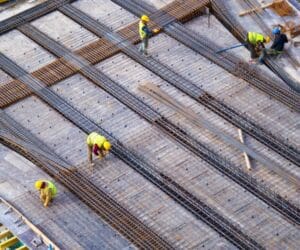
Tie-rod systems, water-stop systems, formwork and scaffolding accessories are not independent single products, but a set of systems that need to be combined and matched to be successfully implemented on site. Unlike ordinary suppliers who only focus on single-product sales, we organize supporting supplies based on the “construction site list” concept. This approach minimizes the situation where main materials arrive but accessories are missing, or construction is suspended due to the need to temporarily find small parts on site — a common pain point that plagues many construction projects and leads to schedule delays. For our customers, this means faster assembly, less trial and error, and fewer reworks, effectively improving on-site construction efficiency.
We Regard Stable Supply as a Core Capability, Not Temporary Coordination
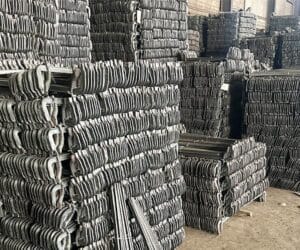
Uncertainty is the biggest enemy of project progress, especially in the context of current economic volatility and supply chain unpredictability. We have long focused on establishing continuous supply capacity for high-frequency specifications, supported by a one-stop warehouse of over 3,000 square meters, where conventional products are centrally stocked and managed in a standardized manner. This systematic layout ensures a higher probability of spot availability, faster order fulfillment response and less waiting time for replenishment for our customers. More importantly, it makes the overall progress of the construction project more predictable, helping customers avoid the risks of schedule delays caused by supply interruptions.
We Value Consistency and Batch Stability, Adapting to Long-Term Cooperation and Continuous Supply
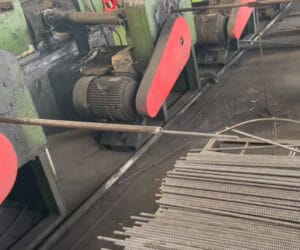
Construction supplies are high-frequency consumables, but they have strict requirements for consistency — even minor deviations in key dimensions or thread matching can seriously affect installation efficiency and project quality, leading to increased rework costs and communication burdens. We focus more on these critical details that directly affect on-site operations, emphasizing batch stability and long-term replicable quality performance. For long-term cooperative customers, stable and reliable product quality is far more important than a single “good-looking” delivery. It directly reduces on-site rework, simplifies communication processes and lowers overall procurement costs, laying a solid foundation for long-term win-win cooperation.
We Continuously Upgrade Products to Make Them More Durable, User-Friendly and Labor-Saving
With the continuous transformation of the construction industry driven by smart technology and new materials, we have always attached great importance to the application of new technologies, new materials and new processes. We actively integrate on-site feedback from customers into our product improvement direction, focusing not on stacking parameters, but on making products more in line with the actual use environment of construction sites in terms of strength, durability, adaptability and construction efficiency. Our ultimate goal is to help customers reduce comprehensive costs in long-term use, improve construction efficiency and enhance project competitiveness through product iteration and upgrading.
We Provide One-Stop Category Coverage for More Complete Procurement Results
The hidden costs of construction site procurement often come from “fragmented but indispensable” small items and accessories, as well as the coordination costs caused by cooperating with multiple suppliers